BriscolAI0
You0
Deck empty · exact endgame
BriscolAI
Briscola against a network that taught itself the game.
Briscola is a two-player trick-taking game from Italy. You and BriscolAI play one card each, the better card wins both, and whoever ends up with more points in their pile wins the game.
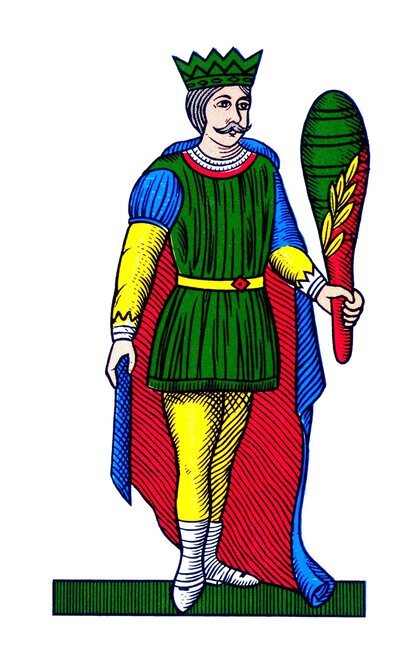
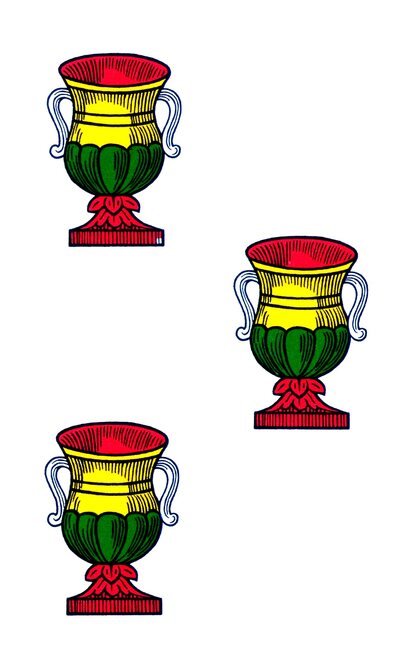
An Italian deck of 40 cards in four suits: coins (denari), cups (coppe), swords (spade) and clubs (bastoni). Each suit has an ace, the numbers two to seven, and three face cards: the jack (fante), the knight (cavallo) and the king (re).
That is also the pecking order within a suit: the ace is the strongest card, then the three, the king, the knight and the jack, then the seven down to the two. Note that the three beats the king. The whole deck is worth 120 points, so 61 wins and 60 each is a draw.
Each player is dealt three cards. The next card is turned face up and tucked under the deck: its suit is the briscola, the trump suit for the whole game, and it gives the game its name. Any card of the trump suit beats every card of the other three suits. The line under the deck names it, so “Briscola: Denari” means coins are trumps.
One player leads by playing a card, and the other answers with any card in hand. You never have to follow suit, and you never have to play a trump. The better card wins the trick:
The winner takes both cards and their points, draws the top card of the deck, and leads the next trick. The other player draws after them, so the face-up briscola card is the last one drawn.
Once the deck is empty, the last three tricks are played from the cards in hand. Then count the points in your pile: 61 or more wins, 60 each is a draw.
While the deck lasts, BriscolAI picks its card with a neural network trained by playing against itself. Once the deck is empty, every card still in play can be worked out from what has been seen, and it plays the last three tricks perfectly with an exact solver, which runs in your browser. The network runs on a small server, so its weights stay private.
When a game ends, the two final scores are sent to that same server, along with who led the first trick, whether you used Show hand, and a random number that groups the games played in this tab. That is the whole list: it is how the network's record against people is measured instead of guessed. Nothing identifies you, nothing is stored in your browser, and closing the tab forgets the random number.